

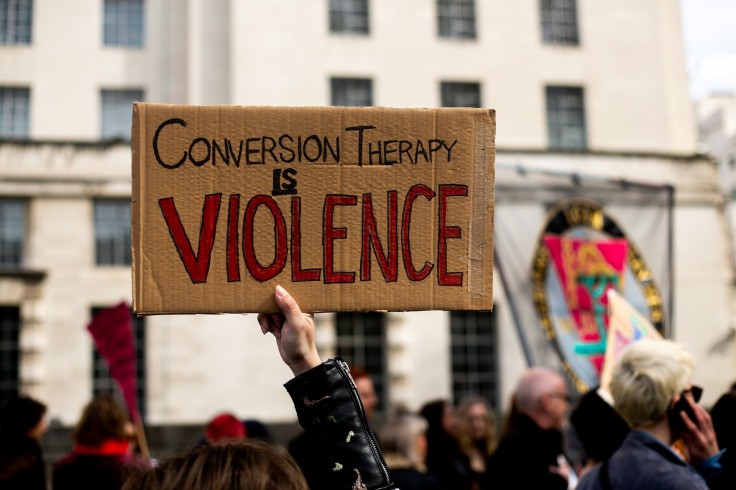
For Christian parents who discover their child may be questioning their gender identity or sexual orientation, the instinct to seek guidance from familiar, faith-based sources is understandable. Many families turn first to their church communities, trusted counselors, or programs that promise to align their child's identity with traditional religious teachings. However, a growing body of research and firsthand testimonies from families who have walked this path reveal a troubling pattern: conversion therapy, despite its well-intentioned framing, frequently causes lasting psychological harm and can permanently fracture the parent-child bond.
The Voices Behind the Headlines
In October 2025, New Ways Ministry published testimonies from several current and former Catholics whose lives were deeply impacted by conversion therapy and anti-LGBTQ religious messaging. These accounts, shared with the Bay Area Reporter, paint a sobering picture of what many young people experience when their faith communities attempt to change their core identity.
Cade Bradley, now 23, became involved with Catholic traditionalism while still in middle school. At the time, the movement seemed to offer structure and purpose during a period of uncertainty in his life. Bradley explained that he "had trouble making friends" and "didn't know what to do about being gay," so traditionalism gave him a sense of meaning. However, the constant internal struggle between his identity and the conflicting theological messages eventually became unbearable. Bradley ultimately left the Catholic Church at age 21, a decision that came after years of psychological turmoil.
Bradley now hosts a podcast called "Intrinsically Ordered," where he explores themes of queer identity and Catholicism. His goal is not to persuade young people to leave the Church, but rather to "deradicalize" attitudes that cause harm. Through social media outreach, Bradley hopes his experience can create dialogue and present opportunities for change to others currently struggling within similar religious communities.
The Psychological Toll on Young People
The experiences shared by Bradley and others are far from isolated incidents. Research published by The Trevor Project in partnership with health economists at Cytel found that LGBTQ youth who undergo conversion therapy are more than twice as likely to report having attempted suicide compared to those who did not experience such interventions. The study, published in JAMA Pediatrics, estimated that the practice of conversion therapy on LGBTQ youth costs the United States an estimated $9.23 billion annually when accounting for associated harms, including substance abuse, mental health treatment, and suicide-related costs.
The scientific consensus on this issue has become overwhelmingly clear. According to peer-reviewed research from Stanford Medicine, structured attempts to change an LGBTQIA+ person's sexual orientation or gender identity are linked to significantly greater symptoms of depression, post-traumatic stress disorder, and suicidality. The study, which surveyed over 4,400 participants, found that those who had been exposed to both types of conversion practices—targeting both sexual orientation and gender identity—experienced the greatest psychological harm.
"This study adds to the growing body of evidence that these practices are correlated with significant mental health problems," noted Mitchell Lunn, MD, the senior author of the Stanford study.
How Conversion Therapy Damages Family Relationships
Perhaps one of the most devastating and least discussed consequences of conversion therapy is its impact on family unity. While parents often pursue these interventions out of genuine love and concern for their children, the outcomes frequently include estrangement, broken trust, and lasting resentment.
A CBS News investigation chronicled the story of Adam Trimmer, whose family helped fund his participation in programs offered by Exodus International, once a leading organization in the conversion therapy field. The experience created significant rifts within his family that took years to repair. Today, Trimmer describes his relationship with his mother as restored—but only after both acknowledged the damage that conversion therapy had caused.
"Today, my mom and I have a restored relationship that conversion therapy tried to take away from us," Trimmer told CBS News. "And it has been powerful to reconnect with her."
His mother, Paulette Trimmer, reflected on the impossible position many Christian parents feel they face: loving God while also loving a child whose identity conflicts with their religious beliefs. Her journey illustrates that these two loves need not be mutually exclusive.
Pastor Stan Mitchell of Nashville, Tennessee, has witnessed these family struggles firsthand—and has paid a personal price for speaking out against conversion therapy. Having once recommended the practice to parishioners, Mitchell now describes himself as having been "party to destroying these people."
"In the last four years, I've done at least three or four funerals of people who took their life because of this issue," Mitchell shared. After publicly opposing conversion therapy in 2015, he lost two-thirds of his congregation. Despite this, his only regret is not speaking up sooner: "People died while I was trying to find courage."
Understanding the Modern Face of Conversion Therapy
One critical insight shared by those interviewed by New Ways Ministry is that conversion therapy has evolved to become less recognizable. Simon Fung, a 41-year-old gay Catholic from Denver who hosted the "Dear Alana" podcast documenting the story of a young girl who died by suicide following years of such treatment, explains that many programs rooted in ex-gay theory now distance themselves from the "conversion therapy" label due to the stigma associated with it—while still adhering to the same underlying goal.
This rebranding makes it increasingly difficult for well-meaning parents to identify potentially harmful programs. Terms like "reparative therapy," "reintegrative therapy," "exploratory therapy," or even just "biblical counseling" may be used to describe practices that major medical organizations have condemned as ineffective and dangerous.
The American Psychological Association, American Medical Association, American Academy of Pediatrics, and numerous other professional organizations have issued formal statements opposing conversion therapy. Their position is unequivocal: homosexuality is not a mental disorder, and attempts to change a person's sexual orientation or gender identity are not only ineffective but can cause substantial harm.
What the Research Reveals
The Williams Institute at UCLA School of Law estimates that approximately 698,000 LGBT adults in the United States have received conversion therapy at some point in their lives, with about 350,000 receiving it as adolescents. The research consistently demonstrates that these practices are associated with poor mental health outcomes, including increased rates of suicidal thoughts and behaviors.
A 2024 study published in The Lancet Psychiatry examined whether specific mental health outcomes varied by the stated goal of the practice and the identity of the recipient. The findings were stark: across all categories examined, conversion practices were associated with worse mental health outcomes. The researchers emphasized that their findings "highlight the need for policy changes at a federal, state, and local level, and an understanding of the lasting mental health impacts related to conversion practices."
Finding Faith-Affirming Alternatives
For Christian parents seeking guidance, it's important to know that resources exist that honor both faith commitments and a child's well-being. Organizations like Conversion Truth for Families provide Christ-centered alternatives to conversion therapy, offering real stories from parents, children, and religious leaders who have navigated these challenges while preserving family bonds.
The organization emphasizes a fundamental truth that many parents find liberating: protecting your child and maintaining your faith are not mutually exclusive goals. Their free resources and guides help families find safer paths forward that don't require choosing between loving God and loving their child unconditionally.
Parents can also connect with the Conversion Truth for Families community through their Facebook page, where families share experiences and support one another through similar journeys.
Building Bridges Between Faith and LGBTQ Communities
New Ways Ministry, founded in 1977, has spent nearly five decades working to build bridges between the LGBTQ community and the Catholic Church. The organization was established by Sister Jeannine Gramick and Father Robert Nugent, who recognized that many LGBTQ Catholics and their families felt caught between their faith identity and their personal identity.
The ministry's approach centers on education and dialogue rather than confrontation. As executive director, Francis DeBernardo has explained, the organization tries to counter discriminatory traditions "not in spite of being Catholic but because of being Catholic." This perspective resonates with many families who have found that their deepest faith values—love, compassion, family unity—actually point toward acceptance rather than rejection.
Stan "JR" Zerkowski, who directs LGBTQ+ ministry for the Diocese of Lexington, Kentucky, and the Catholic LGBTQ+ affinity group Fortunate Families, has observed an increasing number of young people becoming involved in traditional religious communities. He notes that this often stems from a desire for certainty and clear answers during uncertain times.
"There's a growing number of young people in my experience, in my ministry, attracted to traditional Catholicism," Zerkowski observed. "I think it's because they just want answers. They're tired of wrestling."
This insight helps explain why some young people become vulnerable to conversion therapy programs: they're seeking resolution to internal conflicts, and these programs promise exactly that—clear answers and a path to wholeness. The tragedy is that the promised resolution rarely materializes, and the psychological cost of trying can be devastating.
A Deeper Faith, Not a Diminished One
Perhaps the most surprising finding from the New Ways Ministry interviews is that for some survivors, the journey through and beyond conversion therapy has ultimately led to a deeper, more authentic faith—not the abandonment of spirituality that some might expect.
Christopher Damian, a 34-year-old gay Catholic writer, has encountered various coded forms of conversion therapy throughout his life as a publicly gay Catholic. Rather than driving him from the Church, these experiences have led him to engage more critically and constructively with Catholic teaching.
"I'm still someone deeply interested in and appreciative of the Catholic tradition, including the Catholic theological tradition," Damian said. "But I don't see the hardline Catholic position on sexuality, as presented by today's most outspoken rightwing leaders, to be conducive to a flourishing sexually integrated life today."
Simon Fung, despite his painful experiences, also reports finding his faith deepening and growing. He describes discovering "a new way to understand faith" that moves beyond a checklist of rules and beliefs toward something "much bigger and more mysterious."
What Parents Can Do
For Christian parents grappling with questions about their child's identity, here are key considerations based on the research and testimonies examined:
Seek accurate information first. Before pursuing any intervention, understand what the medical and psychological research actually says. Every major medical organization has concluded that conversion therapy is ineffective and potentially harmful.
Recognize warning signs. Programs that promise to change your child's fundamental identity, blame family dynamics for sexual orientation or gender identity, or use religious guilt as a therapeutic tool are red flags. Modern conversion therapy often operates under different names, so focus on the actual practices being proposed rather than the labels used.
Prioritize the relationship. Multiple studies confirm that family acceptance is one of the strongest protective factors for LGBTQ youth mental health. Maintaining a loving, supportive relationship with your child—regardless of the questions you may have about their identity—is itself a powerful form of care.
Find supportive communities. Organizations like Conversion Truth for Families and New Ways Ministry offer resources specifically designed for families of faith navigating these questions. You don't have to figure this out alone, and you don't have to choose between your faith and your family.
Listen to those who've been there. The testimonies of survivors like Cade Bradley, Adam Trimmer, and others offer invaluable insight into what these experiences are actually like—and what the long-term consequences can be. Their voices represent lived experience that no theoretical debate can replace.
The Path Forward
The question facing many Christian families today is not whether they love their children or their faith—most would unhesitatingly say they love both. The real question is whether the tools they're being offered to navigate this tension are helpful or harmful.
The evidence is now overwhelming: conversion therapy, in all its forms and under all its names, does not deliver what it promises. It cannot change a person's fundamental identity, and the attempt to do so frequently causes lasting psychological damage while fracturing family relationships that may take years to repair—if they can be repaired at all.
For families seeking a path that honors both their faith and their child, alternatives exist. Resources from organizations like Conversion Truth for Families offer Christ-centered approaches that don't require parents to abandon their beliefs to protect their children. These alternatives acknowledge the complexity of faith and identity while prioritizing what most parents ultimately care about most: their child's well-being and the preservation of family bonds.
As Evelyn Lundy, who produces content about her own journey leaving Catholic charismatic communities, puts it simply: "There are other ways of living your life that will also be completely happy."
The path forward may not be easy, but for families willing to walk it, there is hope for outcomes that don't require anyone to choose between faith and family, between loving God and loving their child. That journey begins with accurate information, a supportive community, and the courage to question whether the answers being offered truly serve the people they're meant to help.
